
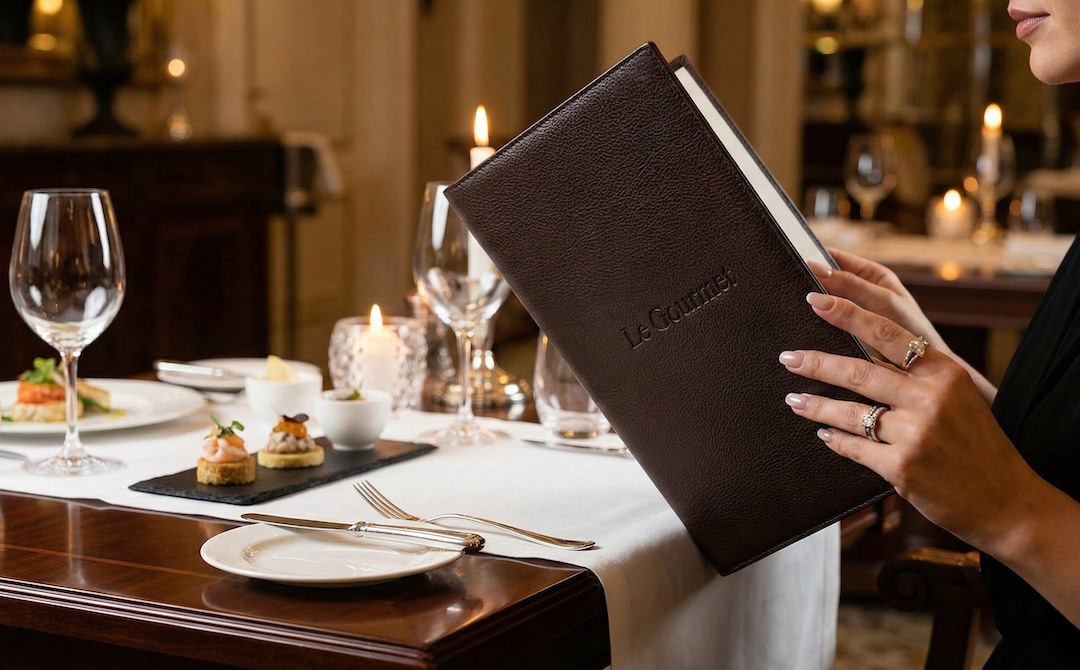
A hotel restaurant is not only about the food and the service. It is also about the details that build a sense of quality from the moment guests arrive. An immaculate table, a menu that feels good to handle, and coherent accessories make the space feel warmer and more reassuring. Yet these elements are sometimes underestimated during an opening or a renovation. This guide presents the essential equipment for a hotel restaurant, what truly separates entry level from high end, and how to create bespoke accessories in a simple, structured way.
1) The essential equipment for a hotel restaurant
Table setting essentials
Every table needs reliable foundations that look good and are easy to manage day to day. This includes plates, bowls, bread plates, glasses, cups, and cutlery aligned with the venue’s style. Add napkins, placemats or tablecloths, as well as a clear presentation of condiments. Salt and pepper shakers, oil and vinegar bottles, butter dishes, small ramekins, coasters, and bread baskets all contribute to a tidy table and smooth service.
Menu presentation is part of the experience. A well made menu holder, a drinks list that is easy to read, and reserved signs reduce hesitation, especially during peak times. For events, large parties, and internal organisation, clear table numbers simplify the team’s work. Finally, a clean bill folder and a pen in good condition make payment more pleasant, which often influences the final memory of the meal.
Guest comfort and hygiene
Comfort is not only about the chairs. Guests immediately perceive lighting, noise, and cleanliness. Plan simple, effective solutions: coat stands or bag hooks, especially in winter, and a lighting atmosphere that matches the restaurant’s identity. On the hygiene side, discreet items make a real difference: napkin dispensers at breakfast, tissue boxes in family areas, and a pleasant hand soap in the toilets. In a very busy restaurant, hand sanitiser stations can still be relevant, especially near the entrance and buffets.
Allergies and dietary needs must be handled seriously. Allergen sheets, buffet labels, and separate utensils reduce risk and reassure guests. For families, a few well chosen items improve the experience: high chairs, suitable cups, and washable placemats that are easy to clean.
Service and back of house tools
Smooth service often relies on tools the guest never sees. Trays, bar mats, ice buckets, wine coolers, corkscrews, and carving tools prevent slowdowns. Service stations need logical storage for cutlery, napkins, spare menus, and small consumables.
For breakfast, banquets, and peak periods, certain items become essential: buffet warmers (chafing dishes), serving spoons and tongs, presentation risers, and sneeze guard style protections when the format requires it. Storage matters just as much: sturdy glass crates, stackable trays, labelled containers, and anti breakage solutions. Investing in robust, easy to clean equipment often reduces long term costs. A simple opening and closing checklist also prevents oversights, from candles to replacement accessories.
Brand touchpoints
Equipment can carry the restaurant’s identity and strengthen consistency with the hotel. Logo coasters, personalised napkins, matched menus, takeaway packaging, cup sleeves, and gift vouchers extend the experience beyond the table. Personalisation should remain elegant: discreet branding, quality materials, and a restrained design look more premium than an overly dominant logo.
2) Low cost versus high end: what really changes
Materials and feel in the hand
The difference is felt immediately. Entry level products are often light, thin, and designed to reduce unit cost. Premium items usually have a pleasing weight, better balance, softer edges, and more controlled finishing. A thick menu holder that opens well and resists stains feels far more elegant than a flexible support that bends and marks quickly. Well finished porcelain or quality ceramics also feel richer than highly standardised products.
Texture and sound matter. Heavier cutlery makes less clatter, which can improve the acoustic atmosphere. A premium glass often offers better clarity and a more pleasant grip. High end is not only visual, it behaves better in real use.
Design, details, and consistency
High end is designed as a system. There is consistency across menus, condiments, table signage, and service accessories. Details make the difference: clean stitching, embossed branding, matching finishes, colours aligned with the hotel’s palette. Low cost items may be acceptable on their own, but they quickly feel inconsistent when brought together, which dilutes the venue’s identity.
In a hotel, this consistency matters even more because guests compare spaces. If the bar is polished and the restaurant feels standard, overall perception drops.
Durability, safety, and total cost
Purchase price is not the true cost. Low cost items often wear faster: textiles that fade, finishes that peel, labels that lift, materials that scratch in washing. They need replacing more often, which increases breakage, waste, and management time. High end equipment is designed to last, so monthly cost can be lower despite a higher initial investment.
Safety also matters, especially for anything in contact with food: stable finishes, suitable materials, and elements that do not degrade under repeated washing. Finally, many premium options now offer more sustainable materials, making it possible to align the guest experience with environmental goals without losing elegance.
3) Is it easy to create bespoke accessories?
A clear method that works
Bespoke is often more accessible than people think, especially when the process is well framed. Start by choosing the item and its constraints: heat resistance, stain resistance, storage dimensions, and handling frequency. Then select a material and finish that match your style and cleaning routines. We approve a sample together, then plan production with a realistic timeline. We support you on logo placement, sizing, branding method, and packaging.
Some products can be customised very quickly: paper items, coasters, menu holders. Items in contact with food, exposed to heat, or requiring a specific shape need more preparation. The simplest strategy is to start with a few high impact pieces, then expand once the process is under control.
Example 1: creating personalised menu holders
A menu holder is a high impact improvement with an immediate effect. You can choose leather, faux leather, fabric, or wood, then add the logo via embossing, debossing, or a small metal plate. The interior system depends on your usage: screws if the menu changes often, sleeves if you want a fast solution. Matching the colour to the hotel’s palette strengthens coherence across the restaurant, bar, and shared spaces.
The process is usually straightforward: logo, materials, mock up, sample, then quantities. You achieve a premium perception without transforming the entire dining room. If you have multiple services, discreet markers can also make the team’s work easier.
Example 2: designing a condiment set and tray made to measure
A condiment set stays visible throughout the meal. A compact tray that holds salt, pepper, oil, vinegar, and a small dish for butter or jam can create a real visual signature. Possible materials are varied: wood, stone, metal, with suitable finishes (matte black, oak, brushed stainless steel). Discreet branding, or clean and coherent labels, is often enough to create a bespoke feel.
This type of product requires thinking through usage: cleaning, refilling, stability, and stain resistance. Prioritise simple shapes that are easy to wash and solid bases. We can combine standard bottles with customised labels, caps, and trays. This delivers a premium result without developing everything from scratch.
Choosing the right balance for your hotel restaurant
The best results come from a balance between usefulness, aesthetics, and consistency. First list what guests touch most: menus, napkins, glasses, cutlery, condiments. Upgrade these items first, because they strongly influence perceived quality. Then work on visual unity across the dining room, from signs to service trays, for a more controlled experience.
Over time, add bespoke touches that tell your story, whether it is local, minimalist, contemporary, or classic. High end is rarely one big purchase. It is a feeling built through a series of consistent details, well chosen and well maintained.

Let's create a world for your guests together












DOWNLOAD CATALOGUE BY SUBSCRIPTION
DOWNLOAD CATALOGUE BY SUBSCRIPTION

ADDRESS
Chemin du Suchet 2
1805, Jongny
Switzerland
+41 21 652 05 09
info@lgbusiness.com